|
|
|
Newest Reviews: New Movies - Abraham Lincoln: Vampire Hunter Old Movies - Touki Bouki: The Journey of the Hyena The Strange Affair of Uncle Harry Archives - Recap: 2000, 2001, 2002, 2003, 2004 , 2005, 2006, 2007 , 2008 , 2009 , 2010 , 2011 , 2012
|
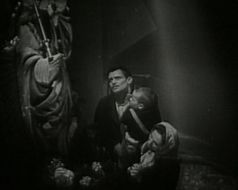
Men on the Mountain (Istvan Szots, 1942)
It seems clear to Szots that the young couple’s way of life, alone with nature in the mountains, is something sacred. Where the two have trouble reading the scripture that will tell them how to baptize their child, they seem to commune effortlessly with nature, walking through the idyllic woods, introducing their offspring to the natural world. “This is our church”, the father says out loud. These scenes are magical, as they talk to the animals and stroll to the homes of their physically distant but emotionally generous neighbors. Before long, though, their Eden is violated, as a timber company purchases the land on which they live. Almost immediately, they find themselves leading industrialized lives, working for an hourly wage, but not spending any time together. The ironic goal of their existence is now to buy their own home, even though they had their own house back on the mountain. Through close association with others, their lives are transformed into a parade of melodramatic miseries. There’s an attempted rape, a house fire, and a violent bout of paralysis in quick succession. As the husband and wife move further from the mountain in a search for help, their situation becomes increasingly dire, and the goodness in humanity seems to slip further away. It is only during their sad return trip from the city that they experience the first real compassion from the harsh outside world. Men on the Mountain is simply but confidently realized for the screen. Thanks to fine performances and a vividly stylized visual approach, it delivers its story effectively, emerging as an indictment of progress, law, and urbanity. Although it is sentimental and nostalgic, it finds little to like about the state of the changing world. Indeed, all that Szots has to offer in the face of hopelessness is a desperate attempt to cling to faith. 70 Jeremy Heilman 08.10.09
|