Brief Encounter (David Lean) 1945
 David Lean’s Brief Encounter towers over the majority of romantic
films, precisely because it calls the bluff of the genre’s wish fulfillment.
The world Lean sets the film in one of precise schedules and heavy familial
obligations. Apparently in 1938’s England, even free time had a desperate
formality and a suffocating routine to it. That the film takes place between the
two world wars cannot be a mistake, as the characters seem to be celebrating
their freedom to such an extent that it becomes freedom’s suffocating
opposite. Reality itself is the bitter third part of this love triangle, and it
becomes the piece’s villain. The film’s two leads, Laura (Celia Johnson) and
Alec (Trevor Howard) meet through their routines, and make a habit of romancing
each other. They seem to add the affair to their to do lists, approaching it
almost as a chore. The film seems like a farce, but perhaps the British reserve
on display is meant to be tragic (and I think most people find it is).
David Lean’s Brief Encounter towers over the majority of romantic
films, precisely because it calls the bluff of the genre’s wish fulfillment.
The world Lean sets the film in one of precise schedules and heavy familial
obligations. Apparently in 1938’s England, even free time had a desperate
formality and a suffocating routine to it. That the film takes place between the
two world wars cannot be a mistake, as the characters seem to be celebrating
their freedom to such an extent that it becomes freedom’s suffocating
opposite. Reality itself is the bitter third part of this love triangle, and it
becomes the piece’s villain. The film’s two leads, Laura (Celia Johnson) and
Alec (Trevor Howard) meet through their routines, and make a habit of romancing
each other. They seem to add the affair to their to do lists, approaching it
almost as a chore. The film seems like a farce, but perhaps the British reserve
on display is meant to be tragic (and I think most people find it is).
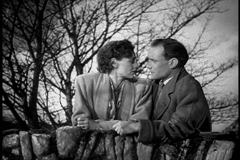 The film uses a voiceover narration to great effect. Alec certainly voices a
great deal of his feelings, but Laura actually provides the narration, so we
understand her character more acutely. Laura is a fan of the movies, and we see
how that passion for filmic desire filters into her relationship. When the
relationship is starting, her and Alec see a movie trailer promising “Flames
of Passion”. The film world promises love writ large, seeming to give the duo
a challenge. When they actually go see the film a week later, they are
disinterested in it, as their real life romance has become much more exciting.
They are already living the fantasy, so they have no need to watch it. When Alec
apparently jilts her, she retreats to the movie theater, but finds the film she
sees tiresome and phony. The movies have lied to her she thinks, so she rejects
them. Once Alec’s absence is explained, however, fantasy has its place once
more. Laura imagines her and Alec in a series of clichés lifted from romance
films. They ride in a Venetian gondola and attend a Parisian opera. The film
implies the cinema has fed a great deal of the romanticism that the heroine
feels. Her desire to attend the films that she does manifests itself in her
feelings toward Alec. She only believes such a relationship is attractive
because the movies she sees have told her so. When the relationship ends, she
wants to give the affair a tragic, Hollywood ending, but finds she cannot bring
herself to do it. She fails to live up to the movies.
The film uses a voiceover narration to great effect. Alec certainly voices a
great deal of his feelings, but Laura actually provides the narration, so we
understand her character more acutely. Laura is a fan of the movies, and we see
how that passion for filmic desire filters into her relationship. When the
relationship is starting, her and Alec see a movie trailer promising “Flames
of Passion”. The film world promises love writ large, seeming to give the duo
a challenge. When they actually go see the film a week later, they are
disinterested in it, as their real life romance has become much more exciting.
They are already living the fantasy, so they have no need to watch it. When Alec
apparently jilts her, she retreats to the movie theater, but finds the film she
sees tiresome and phony. The movies have lied to her she thinks, so she rejects
them. Once Alec’s absence is explained, however, fantasy has its place once
more. Laura imagines her and Alec in a series of clichés lifted from romance
films. They ride in a Venetian gondola and attend a Parisian opera. The film
implies the cinema has fed a great deal of the romanticism that the heroine
feels. Her desire to attend the films that she does manifests itself in her
feelings toward Alec. She only believes such a relationship is attractive
because the movies she sees have told her so. When the relationship ends, she
wants to give the affair a tragic, Hollywood ending, but finds she cannot bring
herself to do it. She fails to live up to the movies.
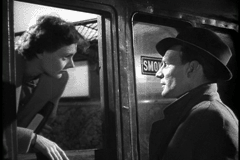 The
cinema asks us to dream, but in doing so, gives us the tools to create
unrealistic expectations from life. The film’s realistic setting reprimands
that desire to dream. Clearly, Laura’s fantasies are those of a bored
housewife, but the film explains them by showing us the cinematic fuel behind
her flames of desire. Laura’s failed romance assumes tragic dimensions not
because it failed, but because she needed it to start in the first place. Lean
directs this film with an immaculate attention to detail. The scenes that show
Laura’s point of view bubble with a near-psychotic disregard for those around
her. Her self-absorption is visualized through Lean’s subtle camera movements.
Johnson’s performance as Laura is brilliant, since it never gives away the
film’s central gag. One could almost feel sorry for her.
The
cinema asks us to dream, but in doing so, gives us the tools to create
unrealistic expectations from life. The film’s realistic setting reprimands
that desire to dream. Clearly, Laura’s fantasies are those of a bored
housewife, but the film explains them by showing us the cinematic fuel behind
her flames of desire. Laura’s failed romance assumes tragic dimensions not
because it failed, but because she needed it to start in the first place. Lean
directs this film with an immaculate attention to detail. The scenes that show
Laura’s point of view bubble with a near-psychotic disregard for those around
her. Her self-absorption is visualized through Lean’s subtle camera movements.
Johnson’s performance as Laura is brilliant, since it never gives away the
film’s central gag. One could almost feel sorry for her.
****
October, 2001
Jeremy Heilman
