|
Newest Reviews:
New Movies -
The Tunnel
V/H/S
The Tall Man
Mama Africa
Detention
Brake
Ted
Tomboy
Brownian Movement
Last Ride
[Rec]³: Genesis
Hara-Kiri: Death of a Samurai
Indie Game: The Movie
Abraham Lincoln: Vampire Hunter
Old Movies -
Touki Bouki: The Journey of the Hyena
Drums Along the Mohawk
The Chase
The Heiress
Show
People
The Strange Affair of Uncle Harry
Pitfall
Driftwood
Miracle Mile
The Great Flamarion
Dark Habits
Archives -
Recap: 2000,
2001, 2002,
2003, 2004
, 2005, 2006,
2007 , 2008
, 2009 ,
2010 , 2011 ,
2012
All reviews alphabetically
All reviews by star rating
All reviews by release year
Masterpieces
Screening Log
Links
FAQ
E-mail me
HOME
| |
The Flying Leathernecks (Nicholas Ray, 1951)
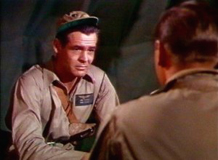 In some ways, it's hard to
believe that the same Nicholas Ray that made the grim anti-war statement Bitter
Victory a few years later first made The Flying Leathernecks, which
follows a squadron of Marine bombers during the Guadalcanal assault. Though
there's obviously some reticence in the characters to engage in combat, when
it's time for action, there's a shift toward the gung-ho as the men invariably
step up to the challenge that The Great War presents. That's not to say that the
characters act inconsistently. Quite the opposite, since there are surprisingly
nuanced and psychologically sound roles for both Robert Ryan and John Wayne
here. What is most surprising is that Ray, who usually offers up a strong
liberal sensibility, doesn’t spend energy here decrying the war so much as he
examines the value of the individual soldier’s life in the grand scheme of
things and the difficulty in issuing a command that might cost some of those
lives. Wayne’s hardened Major Kirby understands that it’s necessary to incur
some casualties during an operation. Tensions arise when it becomes apparent
that this unfortunate fact of life is something that Ryan’s Captain Griff
can’t quite wrap his inexperienced mind around. That the realities of the
world don’t live up to the idealized wishes of those in it is one of Ray’s
key themes, and it’s by illustrating this gap that the film feels most like
the work of its director.
In some ways, it's hard to
believe that the same Nicholas Ray that made the grim anti-war statement Bitter
Victory a few years later first made The Flying Leathernecks, which
follows a squadron of Marine bombers during the Guadalcanal assault. Though
there's obviously some reticence in the characters to engage in combat, when
it's time for action, there's a shift toward the gung-ho as the men invariably
step up to the challenge that The Great War presents. That's not to say that the
characters act inconsistently. Quite the opposite, since there are surprisingly
nuanced and psychologically sound roles for both Robert Ryan and John Wayne
here. What is most surprising is that Ray, who usually offers up a strong
liberal sensibility, doesn’t spend energy here decrying the war so much as he
examines the value of the individual soldier’s life in the grand scheme of
things and the difficulty in issuing a command that might cost some of those
lives. Wayne’s hardened Major Kirby understands that it’s necessary to incur
some casualties during an operation. Tensions arise when it becomes apparent
that this unfortunate fact of life is something that Ryan’s Captain Griff
can’t quite wrap his inexperienced mind around. That the realities of the
world don’t live up to the idealized wishes of those in it is one of Ray’s
key themes, and it’s by illustrating this gap that the film feels most like
the work of its director.
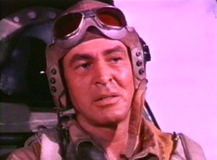 The requirements of military rank
demand that a commanding officer not reveal too many of his emotional concerns
to his subordinates, so one of the most interesting things about Leathernecks
is the way that Ray manages to show Kirby’s efforts to let his troops know
that he’s human too. Saddled with both the unfortunate task of sending his men
to their possible demise and the unenviable position of authority over his
stressed men, he still manages to exhibit compassion, thanks in no small part to
one of John Wayne’s better performances. As unintentionally corny as some of
the scenes that show Kirby at home might be, they undeniably show a different
side of the man than the one that dominates the rest of the film. The strain of
assuming a leadership position in a situation where losses are guaranteed allows
the director a chance to once again examine a form of male estrangement that
can’t quite be articulated. The uneasy alliance between the Major and the
Captain doesn’t contain the broad ideological gulf that exists between most of
Ray’s conflict, but because of the common ground between their points of view,
it feels more realistic and ambivalent in its allegiances toward either side. If
it can’t be said that Ray is accepting the evils of the system here, for once
it seems that he’s begrudgingly attempting to reconcile himself with them.
Because of that sensibility, The Flying Leathernecks packs a surprising
amount of intelligent insight in with its nationalistic rally cry.
The requirements of military rank
demand that a commanding officer not reveal too many of his emotional concerns
to his subordinates, so one of the most interesting things about Leathernecks
is the way that Ray manages to show Kirby’s efforts to let his troops know
that he’s human too. Saddled with both the unfortunate task of sending his men
to their possible demise and the unenviable position of authority over his
stressed men, he still manages to exhibit compassion, thanks in no small part to
one of John Wayne’s better performances. As unintentionally corny as some of
the scenes that show Kirby at home might be, they undeniably show a different
side of the man than the one that dominates the rest of the film. The strain of
assuming a leadership position in a situation where losses are guaranteed allows
the director a chance to once again examine a form of male estrangement that
can’t quite be articulated. The uneasy alliance between the Major and the
Captain doesn’t contain the broad ideological gulf that exists between most of
Ray’s conflict, but because of the common ground between their points of view,
it feels more realistic and ambivalent in its allegiances toward either side. If
it can’t be said that Ray is accepting the evils of the system here, for once
it seems that he’s begrudgingly attempting to reconcile himself with them.
Because of that sensibility, The Flying Leathernecks packs a surprising
amount of intelligent insight in with its nationalistic rally cry.
* * * 1/2
03-18-03
Jeremy Heilman
|
