|
|
|
Newest Reviews: New Movies - Abraham Lincoln: Vampire Hunter Old Movies - Touki Bouki: The Journey of the Hyena The Strange Affair of Uncle Harry Archives - Recap: 2000, 2001, 2002, 2003, 2004 , 2005, 2006, 2007 , 2008 , 2009 , 2010 , 2011 , 2012
|
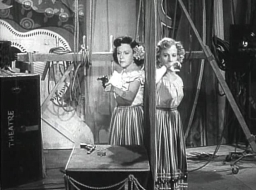
Chained for Life (Harry L. Fraser, 1954)
The rest of Chained for
Life is just as much a hodgepodge as its supposed moral. The melodramatic
love triangle at the film’s center is scarcely enough to sustain the film’s run
time. As such, many of the Chained’s
scant eighty one minutes are taken up showcasing the various acts in the
sisters’ questionable variety show. There are comedy bits, sharpshooting,
juggling, accordion playing, bicyclists, and singing, courtesy of the sisters,
who naturally duet. Their harmonizing prowess is clearly not the prime
attraction here, but they acquit themselves well enough as songstresses. As
actors, they are a bit less successful. They read what could be catty dialogue
(e.g. “If I have a date, you have a date too, my dear!”) with generally wooden
delivery. Chained for Life becomes,
then, something of a freak show. There’s little here beyond the twins’ unique
condition to warrant viewing the film, which somewhat undercuts its overall
message of assimilation. Chained for Life’s
most memorable moments, whether Dorothy’s daffy dream sequence in which she
imagines herself separated from her sister or the few scenes in which the
sisters consider a life-threatening operation to be surgically detached,
emphasize their conjoined state. In the final analysis, then, this stands as a
singular but singularly counterproductive melodrama. 57 Jeremy Heilman 08.04.11
|