Saddled midway between Italian neo-realism and conventional
melodrama, Luchino Visconti’s Rocco and
His Brothers is a stirring and expansive family epic. The film picks up as
the four Parondi brothers and their mother arrive in Milan to live with
Vincenzio, the fifth brother, after the death of their family’s patriarch.
Fresh from a farm in southern Italy, these boys have a lot of adjustments to
make before they’re used to the hustle and bustle of urban life, and
Visconti’s sprawling, but tightly constructed, script traces their
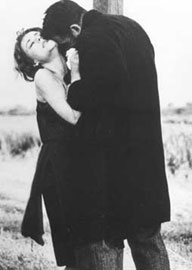
progression, every step of the way. The able cast, particularly Renato Salvatori
and Annie Girardot, tremendously helps enjoyment of the movie. They’re an
incredibly attractive bunch, and Visconti takes time to accentuate the beauty of
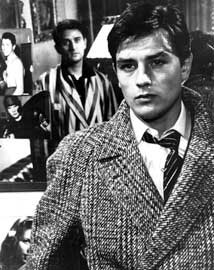
both the male and female actors. Most of the conflict in the film arises between
the saintly but naïve Rocco, who longs to return home, and the loutish, Brando-eqsue
Simone, who is acknowledged as a jerk, but is so sexual in every movement that
he’s hard to resist nonetheless. What keeps Rocco’s sincerity from becoming
overbearing is his conviction that with slightly different circumstances, he
could have turned out just as his brother did. Though the Goofus and Gallant
dynamic between Simone and Rocco are a bit simplistic, the viewpoints of the
other brothers add shading to the movie’s moral spectrum, and the end result
is always far more intelligent than usual. The way that reality continues to
filter into the film also enriches the atmosphere. Much of the filming is done
outdoors, and there’s frankness about sexuality and criminality that’s rare
for the period. When a world-weary prostitute reveals that she’s only 25, the
revelation packs a wallop.
No amount of such detail would make one think this film is
completely realistic, however, and there’s something to be thankful in that.
Visconti elevates his film above the melodramatic when he incorporates his
poignant images, such as a single tear that marks both the beginning and end of
a relationship, and a devastating embrace between two of the brothers at their
supreme moment of grief. The director elegantly expands the story of this unique
family so that it feels representative of a larger social shifting. He begins
the film at a train station where the brothers are a few among the many, and
when the family is reunited near the end of the movie, a shot that shows a toast
which celebrates their achievements pans outside of the small Parondi apartment,
and lets us see an entire apartment building filled with homes that must offer
similar triumphs and tragedies. The final shot of the movie shows an unnamed
group of peasants that appear to be brothers as they walk down the street. It
becomes apparent that we could have easily been told their story (I doubt anyone
would have wish that it had been though). Though Rocco and His Brothers ultimately
reconciles itself with the changes that city life brings, and turns that
acceptance into something resembling a moral, it’s notable that we never get
to see the homeland that the characters often speak so longingly about. After
the climatic moments of the film, it seems utterly untenable. At the end of the
film, it remains for us, like the brothers, something distant and lost.

 Saddled midway between Italian neo-realism and conventional
melodrama, Luchino Visconti’s Rocco and
His Brothers is a stirring and expansive family epic. The film picks up as
the four Parondi brothers and their mother arrive in Milan to live with
Vincenzio, the fifth brother, after the death of their family’s patriarch.
Fresh from a farm in southern Italy, these boys have a lot of adjustments to
make before they’re used to the hustle and bustle of urban life, and
Visconti’s sprawling, but tightly constructed, script traces their
progression, every step of the way. The able cast, particularly Renato Salvatori
and Annie Girardot, tremendously helps enjoyment of the movie. They’re an
incredibly attractive bunch, and Visconti takes time to accentuate the beauty of
both the male and female actors. Most of the conflict in the film arises between
the saintly but naïve Rocco, who longs to return home, and the loutish, Brando-eqsue
Simone, who is acknowledged as a jerk, but is so sexual in every movement that
he’s hard to resist nonetheless. What keeps Rocco’s sincerity from becoming
overbearing is his conviction that with slightly different circumstances, he
could have turned out just as his brother did. Though the Goofus and Gallant
dynamic between Simone and Rocco are a bit simplistic, the viewpoints of the
other brothers add shading to the movie’s moral spectrum, and the end result
is always far more intelligent than usual. The way that reality continues to
filter into the film also enriches the atmosphere. Much of the filming is done
outdoors, and there’s frankness about sexuality and criminality that’s rare
for the period. When a world-weary prostitute reveals that she’s only 25, the
revelation packs a wallop.
Saddled midway between Italian neo-realism and conventional
melodrama, Luchino Visconti’s Rocco and
His Brothers is a stirring and expansive family epic. The film picks up as
the four Parondi brothers and their mother arrive in Milan to live with
Vincenzio, the fifth brother, after the death of their family’s patriarch.
Fresh from a farm in southern Italy, these boys have a lot of adjustments to
make before they’re used to the hustle and bustle of urban life, and
Visconti’s sprawling, but tightly constructed, script traces their
progression, every step of the way. The able cast, particularly Renato Salvatori
and Annie Girardot, tremendously helps enjoyment of the movie. They’re an
incredibly attractive bunch, and Visconti takes time to accentuate the beauty of
both the male and female actors. Most of the conflict in the film arises between
the saintly but naïve Rocco, who longs to return home, and the loutish, Brando-eqsue
Simone, who is acknowledged as a jerk, but is so sexual in every movement that
he’s hard to resist nonetheless. What keeps Rocco’s sincerity from becoming
overbearing is his conviction that with slightly different circumstances, he
could have turned out just as his brother did. Though the Goofus and Gallant
dynamic between Simone and Rocco are a bit simplistic, the viewpoints of the
other brothers add shading to the movie’s moral spectrum, and the end result
is always far more intelligent than usual. The way that reality continues to
filter into the film also enriches the atmosphere. Much of the filming is done
outdoors, and there’s frankness about sexuality and criminality that’s rare
for the period. When a world-weary prostitute reveals that she’s only 25, the
revelation packs a wallop.
 No amount of such detail would make one think this film is
completely realistic, however, and there’s something to be thankful in that.
Visconti elevates his film above the melodramatic when he incorporates his
poignant images, such as a single tear that marks both the beginning and end of
a relationship, and a devastating embrace between two of the brothers at their
supreme moment of grief. The director elegantly expands the story of this unique
family so that it feels representative of a larger social shifting. He begins
the film at a train station where the brothers are a few among the many, and
when the family is reunited near the end of the movie, a shot that shows a toast
which celebrates their achievements pans outside of the small Parondi apartment,
and lets us see an entire apartment building filled with homes that must offer
similar triumphs and tragedies. The final shot of the movie shows an unnamed
group of peasants that appear to be brothers as they walk down the street. It
becomes apparent that we could have easily been told their story (I doubt anyone
would have wish that it had been though). Though Rocco and His Brothers ultimately
reconciles itself with the changes that city life brings, and turns that
acceptance into something resembling a moral, it’s notable that we never get
to see the homeland that the characters often speak so longingly about. After
the climatic moments of the film, it seems utterly untenable. At the end of the
film, it remains for us, like the brothers, something distant and lost.
No amount of such detail would make one think this film is
completely realistic, however, and there’s something to be thankful in that.
Visconti elevates his film above the melodramatic when he incorporates his
poignant images, such as a single tear that marks both the beginning and end of
a relationship, and a devastating embrace between two of the brothers at their
supreme moment of grief. The director elegantly expands the story of this unique
family so that it feels representative of a larger social shifting. He begins
the film at a train station where the brothers are a few among the many, and
when the family is reunited near the end of the movie, a shot that shows a toast
which celebrates their achievements pans outside of the small Parondi apartment,
and lets us see an entire apartment building filled with homes that must offer
similar triumphs and tragedies. The final shot of the movie shows an unnamed
group of peasants that appear to be brothers as they walk down the street. It
becomes apparent that we could have easily been told their story (I doubt anyone
would have wish that it had been though). Though Rocco and His Brothers ultimately
reconciles itself with the changes that city life brings, and turns that
acceptance into something resembling a moral, it’s notable that we never get
to see the homeland that the characters often speak so longingly about. After
the climatic moments of the film, it seems utterly untenable. At the end of the
film, it remains for us, like the brothers, something distant and lost.