|
Newest Reviews:
New Movies -
The Tunnel
V/H/S
The Tall Man
Mama Africa
Detention
Brake
Ted
Tomboy
Brownian Movement
Last Ride
[Rec]³: Genesis
Hara-Kiri: Death of a Samurai
Indie Game: The Movie
Abraham Lincoln: Vampire Hunter
Old Movies -
Touki Bouki: The Journey of the Hyena
Drums Along the Mohawk
The Chase
The Heiress
Show
People
The Strange Affair of Uncle Harry
Pitfall
Driftwood
Miracle Mile
The Great Flamarion
Dark Habits
Archives -
Recap: 2000,
2001, 2002,
2003, 2004
, 2005, 2006,
2007 , 2008
, 2009 ,
2010 , 2011 ,
2012
All reviews alphabetically
All reviews by star rating
All reviews by release year
Masterpieces
Screening Log
Links
FAQ
E-mail me
HOME
| |
The Gospel According to St. Matthew (Pier Paolo
Pasolini) 1964
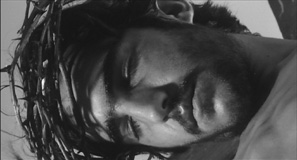 The slightly uncomfortable close-ups that dominate Pier
Paolo Pasolini’s Vatican-endorsed The Gospel According to St. Matthew
place the audience in a position where they’re closer than they might have
ever expected to be to the towering Biblical figures that dominate the Passion
play. The movie camera has a tendency to make the things it photographs feel
genuine, even as common sense keeps one aware of a film’s artifice, but that
line blurs often while watching the intricately created world that Pasolini has
made here. The entirely unmannered performances (all by non-professional actors,
with his mother as the aged Virgin Mary), the seemingly authentic locations
(Southern Italy standing in for Jerusalem and Egypt), and the camera setups
(which usually take the perspective of a spectator in a crowd when not showing a
close-up) all conspire to create a feel that’s closer to documentary that one
would think possible given the subject matter. Even the anachronistic music
selections, which range from Bach to Billie Holiday fit in here, somehow adding
to the movie’s unshakable sense of authenticity. Because of the oddness and
uniqueness of the production, the effect of Pasolini’s direction takes a while
to take hold, but once it begins to, its power becomes cumulative. By the
closing scenes, which show Christ’s crucifixion and resurrection, the
filmmaking’s spiritual fervor became deeply affecting, even to a non-believer
like myself.
The slightly uncomfortable close-ups that dominate Pier
Paolo Pasolini’s Vatican-endorsed The Gospel According to St. Matthew
place the audience in a position where they’re closer than they might have
ever expected to be to the towering Biblical figures that dominate the Passion
play. The movie camera has a tendency to make the things it photographs feel
genuine, even as common sense keeps one aware of a film’s artifice, but that
line blurs often while watching the intricately created world that Pasolini has
made here. The entirely unmannered performances (all by non-professional actors,
with his mother as the aged Virgin Mary), the seemingly authentic locations
(Southern Italy standing in for Jerusalem and Egypt), and the camera setups
(which usually take the perspective of a spectator in a crowd when not showing a
close-up) all conspire to create a feel that’s closer to documentary that one
would think possible given the subject matter. Even the anachronistic music
selections, which range from Bach to Billie Holiday fit in here, somehow adding
to the movie’s unshakable sense of authenticity. Because of the oddness and
uniqueness of the production, the effect of Pasolini’s direction takes a while
to take hold, but once it begins to, its power becomes cumulative. By the
closing scenes, which show Christ’s crucifixion and resurrection, the
filmmaking’s spiritual fervor became deeply affecting, even to a non-believer
like myself.
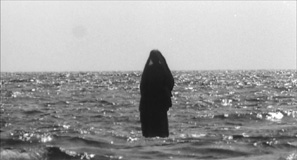 Much of the conviction in the film is undoubtedly centered
in the authoritative performance by Enrique Irazoqui as Jesus. A student in
architecture school before being discovered by Pasolini, Irazoqui is a
commanding screen presence. He embodies the sort of certainty, charisma, and
devotion that great leaders must have. To Pasolini, it’s of utmost importance
that the audience understands Christ’s ability to sway people to his cause.
When combined with the scenes showing the machinations of those who conspire
against the Son of God, this knowing attitude politicizes the movie. That this
is the tale of a martyr who’s self-aware in a both political and spiritual
sense seems to be what fuels the politically aware Pasolini’s interest here,
despite the rather reactionary traditionalism that marks the film otherwise.
Another possible reason that Pasolini might have chosen to make an honest
dramatization of Biblical text is to make that shopworn text come alive for
audiences, perhaps inspiring people to think about it in a fresh light. Because
scripture, almost by definition is something that’s static, and because film
is something inherently dynamic, seeing a familiar, almost inborn, story
invigorated as it is here is a near-religious experience in itself. The bliss
is interrupted sometimes by some of the sloppy editorial choices that Pasolini
makes (a constant bane in his work), but it does little to dissipate the almost
tangible power that exists in The Gospel According to St. Matthew.
Much of the conviction in the film is undoubtedly centered
in the authoritative performance by Enrique Irazoqui as Jesus. A student in
architecture school before being discovered by Pasolini, Irazoqui is a
commanding screen presence. He embodies the sort of certainty, charisma, and
devotion that great leaders must have. To Pasolini, it’s of utmost importance
that the audience understands Christ’s ability to sway people to his cause.
When combined with the scenes showing the machinations of those who conspire
against the Son of God, this knowing attitude politicizes the movie. That this
is the tale of a martyr who’s self-aware in a both political and spiritual
sense seems to be what fuels the politically aware Pasolini’s interest here,
despite the rather reactionary traditionalism that marks the film otherwise.
Another possible reason that Pasolini might have chosen to make an honest
dramatization of Biblical text is to make that shopworn text come alive for
audiences, perhaps inspiring people to think about it in a fresh light. Because
scripture, almost by definition is something that’s static, and because film
is something inherently dynamic, seeing a familiar, almost inborn, story
invigorated as it is here is a near-religious experience in itself. The bliss
is interrupted sometimes by some of the sloppy editorial choices that Pasolini
makes (a constant bane in his work), but it does little to dissipate the almost
tangible power that exists in The Gospel According to St. Matthew.
* * * *
11-18-02
Jeremy Heilman
|
