Salesman (Albert and David Maysles) 1969
 Albert
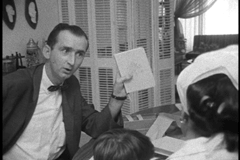
and David Maysles' acclaimed 1969 documentary Salesman is a historically
significant example of what the film’s creators called “cinema direct”.
Basically, the film’s great innovation was that it presented a documentary
feature without voiceover narration. The implication being that the audience is
seeing events directly as they transpired without any directorial commentary. Of
course, this is hogwash. Clearly, the presence of the director and his brother
colored the events as they unfolded (and the film never acknowledges their
presence by showing them onscreen or allowing its subjects to recognize them).
Also, any edited film is clearly going to contain a great deal of commentary. By
presenting edited footage, they are telling us what they want us to look at.
There is clearly a narrative here. So, even if their conceit of cinema direct is
a bit of a put on, the film is an effective bit of documentary filmmaking.
Albert
and David Maysles' acclaimed 1969 documentary Salesman is a historically
significant example of what the film’s creators called “cinema direct”.
Basically, the film’s great innovation was that it presented a documentary
feature without voiceover narration. The implication being that the audience is
seeing events directly as they transpired without any directorial commentary. Of
course, this is hogwash. Clearly, the presence of the director and his brother
colored the events as they unfolded (and the film never acknowledges their
presence by showing them onscreen or allowing its subjects to recognize them).
Also, any edited film is clearly going to contain a great deal of commentary. By
presenting edited footage, they are telling us what they want us to look at.
There is clearly a narrative here. So, even if their conceit of cinema direct is
a bit of a put on, the film is an effective bit of documentary filmmaking.
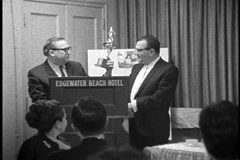 I definitely prefer Salesman to the Maysles’ Grey Gardens, a
film that seemed somewhat exploitative to me. Here, they don't seem to be
condescending to their subject (a downtrodden group of door-to-door Bible
salesmen) much. The film is a real-life Paper Moon, in that the whole
setup feels like a scam. You get the impression that the housewives that buy the
Bibles that are sold do so out of a sense of guilt, obligation, or good manners.
The film is fascinated by the psyches of its salesmen. Their reaction once a
deal is made or lost is quite telling. It manages to make you reconsider the
function of any salesman’s relationship with his buyer.
I definitely prefer Salesman to the Maysles’ Grey Gardens, a
film that seemed somewhat exploitative to me. Here, they don't seem to be
condescending to their subject (a downtrodden group of door-to-door Bible
salesmen) much. The film is a real-life Paper Moon, in that the whole
setup feels like a scam. You get the impression that the housewives that buy the
Bibles that are sold do so out of a sense of guilt, obligation, or good manners.
The film is fascinated by the psyches of its salesmen. Their reaction once a
deal is made or lost is quite telling. It manages to make you reconsider the
function of any salesman’s relationship with his buyer.
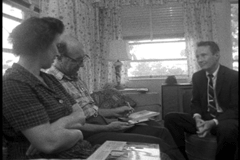 The main narrative of the film follows Paul Brennan, one of the salesmen, as he
hits a dry streak in his career. His slow meltdown is evidenced through his
growing disdain for his clients, and the reaction of his fellow salesmen toward
him. The Maysles clearly want us to consider his dilemma in a larger sense. For
example, although his business feels exploitative, he only travels to the houses
of people that have requested, through their church, that he visits. When a
woman is pressured into agreeing to purchase a Bible, one of the salesmen lies,
saying he is the district manager, and would be forced to charge the salesman
that sold the Bible for the book if she does not pay. Clearly, his lie is wrong,
but the woman’s agreement to purchase the book has also been violated. The
film is admirable because it doesn’t allow us to paint its moral complexity in
black and white terms. The Maysles have managed to craft a thoroughly interesting
picture, even if they haven’t quite invented a new form of cinema. It hasn't dated much at
all, which is both disturbing and enlightening. I imagine it would be
required viewing for any documentary fan.
The main narrative of the film follows Paul Brennan, one of the salesmen, as he
hits a dry streak in his career. His slow meltdown is evidenced through his
growing disdain for his clients, and the reaction of his fellow salesmen toward
him. The Maysles clearly want us to consider his dilemma in a larger sense. For
example, although his business feels exploitative, he only travels to the houses
of people that have requested, through their church, that he visits. When a
woman is pressured into agreeing to purchase a Bible, one of the salesmen lies,
saying he is the district manager, and would be forced to charge the salesman
that sold the Bible for the book if she does not pay. Clearly, his lie is wrong,
but the woman’s agreement to purchase the book has also been violated. The
film is admirable because it doesn’t allow us to paint its moral complexity in
black and white terms. The Maysles have managed to craft a thoroughly interesting
picture, even if they haven’t quite invented a new form of cinema. It hasn't dated much at
all, which is both disturbing and enlightening. I imagine it would be
required viewing for any documentary fan.
***1/2
October, 2001
Jeremy Heilman
