Even
though it’s the tamest film that trash auteur John Waters had made up until
that point, the Baltimore suburbs of his Polyester are so vile that they
make the suburban hell of its spiritual successor, Douglas Sirk’s All That
Heaven Allows, look like utopia in comparison. Waters seems to find
something to mock in every facet of suburban life here, and argues that the
preened lawns and moral superiority that thrive there cover up the excitement of
real life (which seems to lie in black, gay, or fringe culture in most of
Waters’ films). He extends this metaphor here by including Odorama, a
scratch-and-sniff gimmick that enables the audience to smell unpleasant scents,
such as oven fumes and sweaty gym shoes, while watching the movie, so that
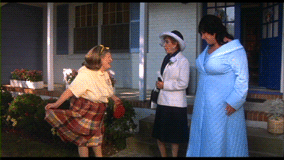
we’re reminded of the invigorating stench of reality. Using drag queen Divine
as Francine Fishpaw, his put upon heroine, he creates a downward spiral that’s
so severe that even the family pet kills itself. The people who live in these
suburbs are prudish, judgmental, and so subtly racist that you could tell how
easily their prejudices could be missed. The abundance of consumer products
shown in many shots underlines the lame definitions of success that these people
use to define their success. Waters’ humor might be as broad as possible in Polyester,
but it’s also astute enough here to be funny from moment to moment.
The
second half of the film explores Francine’s wish fulfillment after she hits
rock bottom, but since her environment and ideals are so trite, this empowerment
becomes comic. The rehabilitation that her family eventually finds is as
ridiculously over the top as their afflictions were. When they finally become a
normal American family, their life is as banal as ever. Worse yet, it lacks any
distinctiveness, and it submerges into a new age dullness. Francine falls in
love with Todd Tomorrow (Tab Hunter), a hunky, coke-snorting stud who runs an
art house drive-in theater where the patrons read Cahiers de Cinema.
Unfortunately, the romance has no effect whatsoever when it pushes toward
sincerity since sincerity is so far removed from the movie’s early modus
operandi. It’s tough to feel the upswing that Francine does, even temporarily.
Waters has waited too long to trot out his romantic subplot, and has been too
effective at creating an environment that trains us to be immediately suspicious
of it. The relationship between Cuddles and Francine, which was the most
endearing element of the first half of the film fades into the background as the
film continues, leaving a hole that Todd can’t fill. You thank God when the
movie suddenly brings back Cuddles and begins deflating the glory of Todd,
because it starts pushing the film back toward its subversive roots. Like in
many of his films, Waters has created too many plot threads here, and when he
begins tying them all up, the movie sheds momentum.