|
|
|
Newest Reviews: New Movies - Abraham Lincoln: Vampire Hunter Old Movies - Touki Bouki: The Journey of the Hyena The Strange Affair of Uncle Harry Archives - Recap: 2000, 2001, 2002, 2003, 2004 , 2005, 2006, 2007 , 2008 , 2009 , 2010 , 2011 , 2012
|
Personal Best (Robert Towne, 1982)
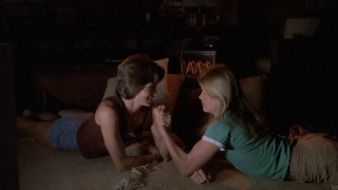
The film, starring Mariel Hemingway and Patrice Donnelly, is nominally a relationship drama. It traces the budding romance of Chris, a promising yet unformed teen women’s track star, and Tory, a surefire bet for the Olympic team, if only the Moscow Olympics were not going to be boycotted by the Americans. Towne is careful to never much let the girls’ emotional dramas, or the fact that they are engaging in a lesbian relationship, overrun his focus on their sporting lives. As Personal Best moves on, the on-again, off-again nature of their relationship becomes secondary to the way that it’s affecting their athletic accomplishments. Erotic nudity becomes secondary to casual locker room nudity. Pain becomes secondary to performance. Towne’s approach forces the audience to accept the characters on their own terms at every point. His film captures both the lack of self-consciousness that the young have and the sad, sweet way that they take everything to heart. He tells this story with sexual frankness might have seemed risible over twenty-five years ago, but now simply seems frank. So many of Personal Best’s non-verbal moments find fleeting beauty in the mere act of movement (Claire Denis’ Beau Travail is close to it in spirit). If Towne’s plotting of the on-field action is slightly more clichéd, that probably has more to do with the limitations of the sports genre than any particular lack of invention on his part. Endowed with remarkable performances, superb photography, and a clear vision of what matters to its characters, Personal Best is an underappreciated gem in a genre full of filler. 72 Jeremy Heilman 06.28.09
|