|
Newest Reviews:
New Movies -
The Tunnel
V/H/S
The Tall Man
Mama Africa
Detention
Brake
Ted
Tomboy
Brownian Movement
Last Ride
[Rec]³: Genesis
Hara-Kiri: Death of a Samurai
Indie Game: The Movie
Abraham Lincoln: Vampire Hunter
Old Movies -
Touki Bouki: The Journey of the Hyena
Drums Along the Mohawk
The Chase
The Heiress
Show
People
The Strange Affair of Uncle Harry
Pitfall
Driftwood
Miracle Mile
The Great Flamarion
Dark Habits
Archives -
Recap: 2000,
2001, 2002,
2003, 2004
, 2005, 2006,
2007 , 2008
, 2009 ,
2010 , 2011 ,
2012
All reviews alphabetically
All reviews by star rating
All reviews by release year
Masterpieces
Screening Log
Links
FAQ
E-mail me
HOME
| |
Bird (Clint Eastwood, 1988)
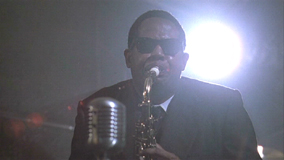 Bird, Clint Eastwood’s ambitious treatment of the life of Jazz
improvisationalist Charlie “Bird” Parker, uses a fragmented time structure
in a seeming attempt to replicate the construction of its subject’s music.
Eastwood edits the film not in any chronological sense, but instead in a way
that suggests its subject’s life is to be taken as a whole; that the artist is
inseparable from the art. There is no “present” time period in the movie,
and everything that occurs after the titular artist’s awakening gets treated
with the same importance. It’s a bold approach that mostly works, but comes
with some inherent pitfalls. For example, the first forty minutes or so of the
movie are tough to bear. The murky, depressing tone of the first act eschews the
usual rise to fame that most biopics present, and it requires a definite period
of adjustment for the viewer to sink into its setting. At other times, the sequencing of the
scenes feels a bit off. The movie plays like a greatest hits album,
in that it occasionally features scenes that are dynamite on their own, but not exactly
emotionally contiguous with what’s preceded them. Still, cumulatively,
Eastwood delivers a compelling and richly layered portrait of the artist. So
much so, in fact, that when the director finally gets around to showing Bird’s
inevitable death, the montage of people flashing before his lives feels
completely extraneous. The entire movie, from its rambling asides to its quiet
interludes, fills that role quite nicely.
Bird, Clint Eastwood’s ambitious treatment of the life of Jazz
improvisationalist Charlie “Bird” Parker, uses a fragmented time structure
in a seeming attempt to replicate the construction of its subject’s music.
Eastwood edits the film not in any chronological sense, but instead in a way
that suggests its subject’s life is to be taken as a whole; that the artist is
inseparable from the art. There is no “present” time period in the movie,
and everything that occurs after the titular artist’s awakening gets treated
with the same importance. It’s a bold approach that mostly works, but comes
with some inherent pitfalls. For example, the first forty minutes or so of the
movie are tough to bear. The murky, depressing tone of the first act eschews the
usual rise to fame that most biopics present, and it requires a definite period
of adjustment for the viewer to sink into its setting. At other times, the sequencing of the
scenes feels a bit off. The movie plays like a greatest hits album,
in that it occasionally features scenes that are dynamite on their own, but not exactly
emotionally contiguous with what’s preceded them. Still, cumulatively,
Eastwood delivers a compelling and richly layered portrait of the artist. So
much so, in fact, that when the director finally gets around to showing Bird’s
inevitable death, the montage of people flashing before his lives feels
completely extraneous. The entire movie, from its rambling asides to its quiet
interludes, fills that role quite nicely.
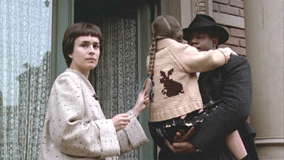 Bird wouldn’t be half the film it is if not for the
sensational performances by Forest Whitaker and Diane Venora, as the influential
jazz musician and his wife. The scenes the two share encapsulate the film’s
frustrated, yet grudgingly tolerant, attitude toward Bird’s self-destructive
tendencies. As the script moves through episodic scenes of Bird’s life it’s
that tension that remains a constant. Always, we’re reminded that the synapses
that allow him to create his art and those that make him turn to drugs are
intertwined, and as played by Whittaker, the musician has a self-awareness that
makes his actions tragic. Where the movie comes up slightly short is in its
reticence to demonstrate Bird’s creative process. Though, by definition, the
end result and artistic creation are one in improvised jazz, there is only one
scene, nestled over two hours into the film, where Bird explains the
sensations and excitement that he feels while practicing his art. Its arrival is a relief,
but for some it might be too little, too late. This determinedly dark picture
with a nearly three-hour run time, is the sort that exasperates viewers not
ready to meet it on its own terms. Nonetheless, Bird’s focus on the bleaker aspects of its story
is a sign of its remarkable integrity. Eastwood clearly is committed to
presenting Bird to his audience with all of his complexities and contradictions
intact. It becomes apparent by the end of the film that anything less would have
been an unfair whitewashing of the man’s image.
Bird wouldn’t be half the film it is if not for the
sensational performances by Forest Whitaker and Diane Venora, as the influential
jazz musician and his wife. The scenes the two share encapsulate the film’s
frustrated, yet grudgingly tolerant, attitude toward Bird’s self-destructive
tendencies. As the script moves through episodic scenes of Bird’s life it’s
that tension that remains a constant. Always, we’re reminded that the synapses
that allow him to create his art and those that make him turn to drugs are
intertwined, and as played by Whittaker, the musician has a self-awareness that
makes his actions tragic. Where the movie comes up slightly short is in its
reticence to demonstrate Bird’s creative process. Though, by definition, the
end result and artistic creation are one in improvised jazz, there is only one
scene, nestled over two hours into the film, where Bird explains the
sensations and excitement that he feels while practicing his art. Its arrival is a relief,
but for some it might be too little, too late. This determinedly dark picture
with a nearly three-hour run time, is the sort that exasperates viewers not
ready to meet it on its own terms. Nonetheless, Bird’s focus on the bleaker aspects of its story
is a sign of its remarkable integrity. Eastwood clearly is committed to
presenting Bird to his audience with all of his complexities and contradictions
intact. It becomes apparent by the end of the film that anything less would have
been an unfair whitewashing of the man’s image.
71
Jeremy Heilman
01-03-04
|
